01
Curb transition, parking lot access
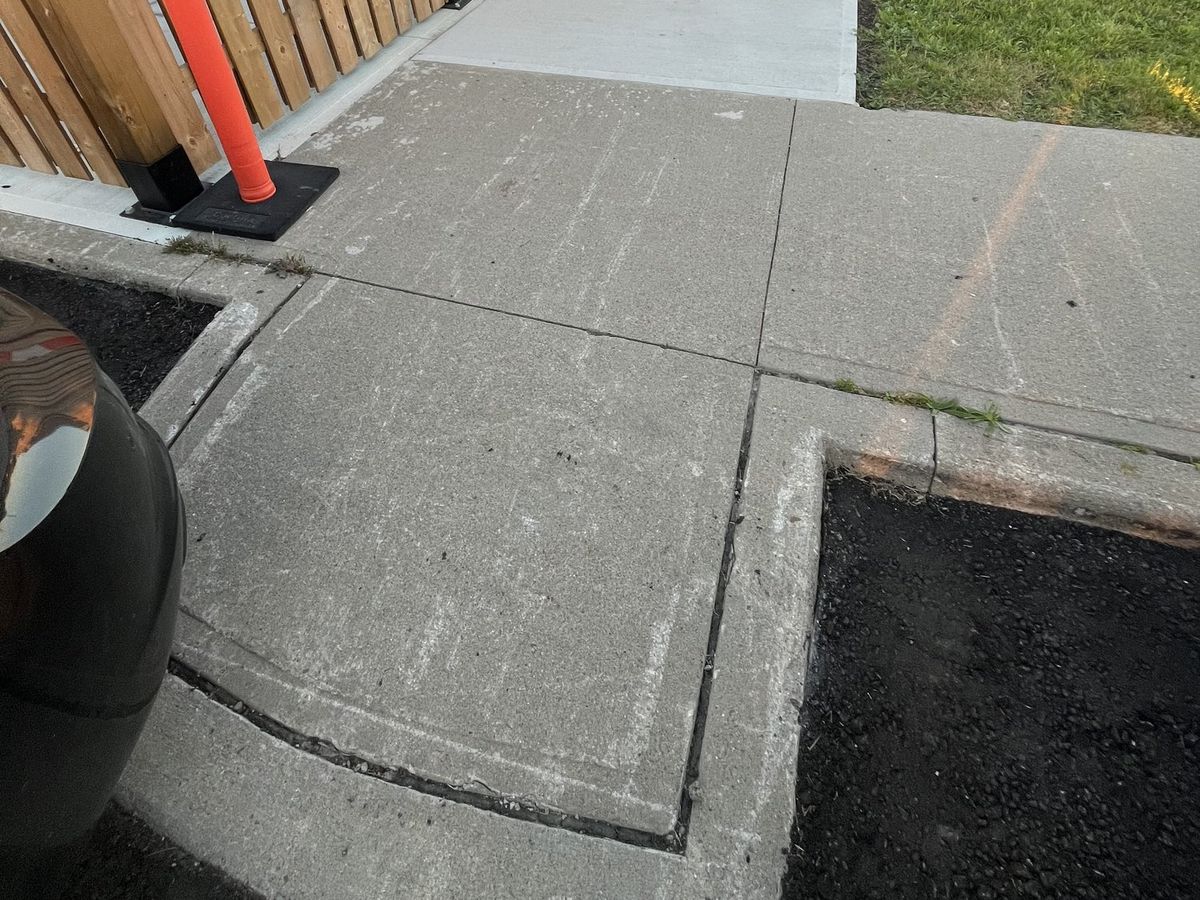
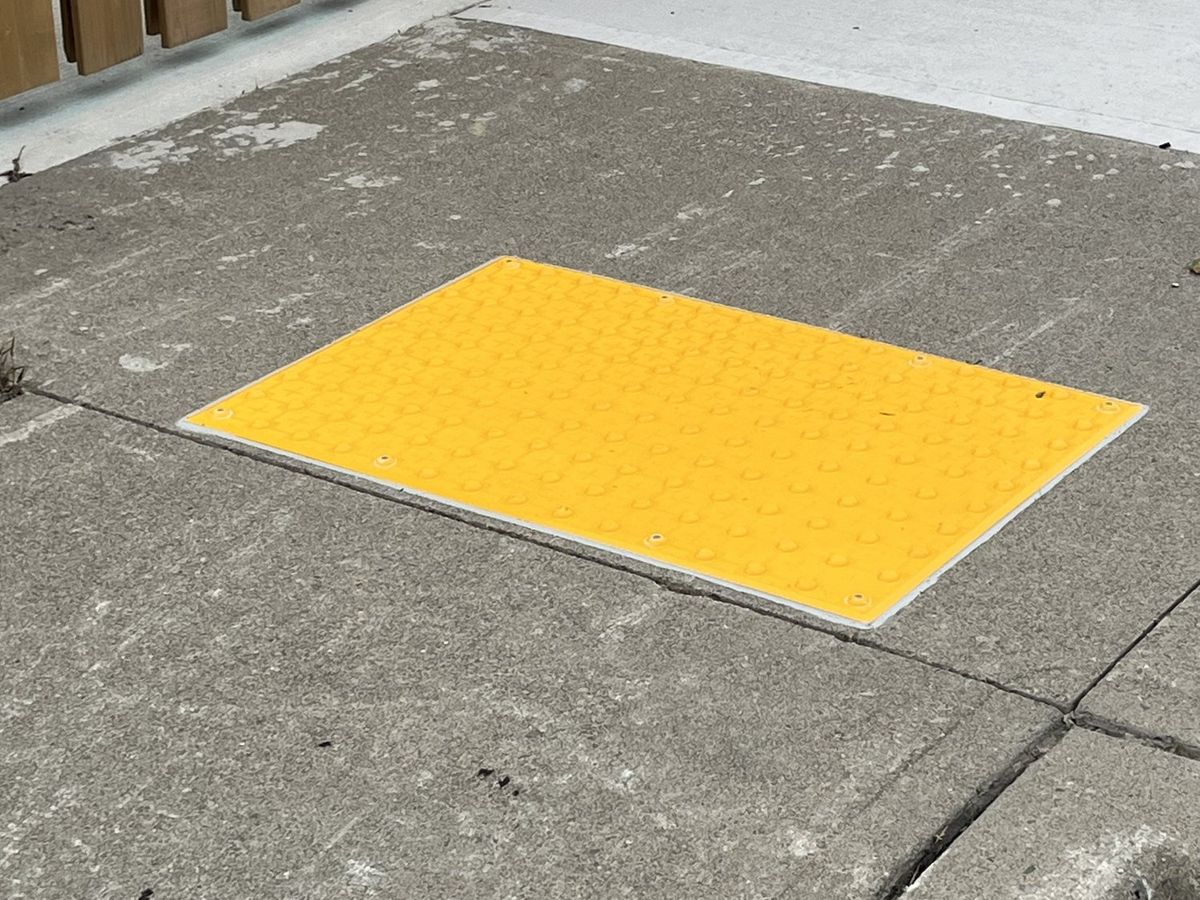
Tactile access tile installed at the curb transition.
North Shore Safety leads health & safety from the executive table down to the site inspection — programs, audits, and response plans built by people who have worked safety from the tools up, across civil infrastructure, ICI and residential construction, rail, manufacturing, and foundry operations. OHSA-aligned, crew-tested, and defensible when someone actually asks to see it.

Safety leadership at every level — setting direction with owners and executives, coaching the supervisors who carry the program, and walking the site with your crews. No full-time safety lead? We fill that seat.
Learn more →A complete health & safety documentation package — written for how your site actually runs, not copied from a template. Built once, defensible every time someone asks to see it.
Learn more →Full-site OHSA and provincial-standard audits with a prioritized, plain-language corrective action list.
Learn more →Recordkeeping systems built to withstand inspection — organized, current, and ready before anyone asks.
Learn more →On the ground when it happens — immediate response support, root-cause investigation, and reporting that meets recordkeeping standards and reduces recurrence.
Learn more →Written emergency procedures and response plans built for your specific site — not a boilerplate template pulled off a shelf.
Learn more →Ongoing tracking of proposed and final rules relevant to your trade, with plain-language impact briefs.
Learn more →North Shore was built on a simple premise: safety compliance shouldn't be a scramble. It should be a steady, documented practice that holds up whether the inspector arrives announced or not.
Our team has worked safety from both sides — on the tools, and as on-site safety lead across heavy civil and complex infrastructure, ICI and residential construction, rail and transit, manufacturing, and foundry and casting operations, from single sites to multi-site portfolios — and we work the same way on yours: walking the floor, mentoring your supervisors, reviewing your programs, and translating dense regulatory language into procedures your crew will actually follow. We don't just flag what's wrong; we help you fix it and keep the paper trail to prove it.
When a rule changes, you hear it from us first — not from a citation.
We're fully WSIB-covered with $2,000,000 in commercial general liability coverage, and we specify and install accessibility product systems from established manufacturers — including Kinesik and SureWerx — matched to your site's requirements.
North Shore Safety identifies accessibility barriers along your property's path of travel — parking, entrances, walkways, thresholds, wayfinding — and delivers the fix: specified, supplied, and installed, with the documentation to prove it. AODA-driven, contractor-delivered.
Ontario businesses and non-profits with 20 or more employees must self-audit and file an accessibility compliance report under the AODA by December 31, 2026. Many facilities are still operating under "grandfathered" status — built to whatever accessibility standard was in effect at the time. That status isn't permanent: once a trigger event occurs, the space has to meet the accessibility requirements in the current Ontario Building Code, not the one from the day it was built.
North Shore Safety runs the full pathway retrofit for compliance: parking and drop-off, entrances, walkways, thresholds, and wayfinding — assessed, specified, sourced, and installed, then verified with the documentation you need to self-certify and file on time.
Assess → Specify → Supply → Install → Verify
Non-compliance risk under AODA s. 37: up to $100,000/day for corporations, $50,000/day for individuals and directors. Penalties & 2026 reporting checklist →
Managing accessibility across a portfolio usually means a different contractor, timeline, and paper trail for every site. North Shore Safety runs a single, standardized pathway retrofit program across your entire portfolio — one point of contact, one reporting standard, one team that already knows your properties.
Every property audited against the same standard, with a prioritized retrofit schedule across your whole portfolio — not handled site by site.
One reporting format across every site, so your compliance record stays consistent and audit-ready no matter how many properties you manage.
Retrofit work scheduled around your budget cycles and operational constraints, property by property, on a timeline that works for your organization.
One team, one relationship — no re-explaining your portfolio to a new contractor at every property.
A Southern Ontario waste and recycling operator took on a public-access bin pick-up role, moving the site from industrial use to one the public visits. A change of occupancy is a grandfathering trigger, so the exterior paths of travel had to meet current accessibility requirements. We completed the accessible pathway retrofit for compliance across six locations.
Tactile access tile installed at the curb transition.
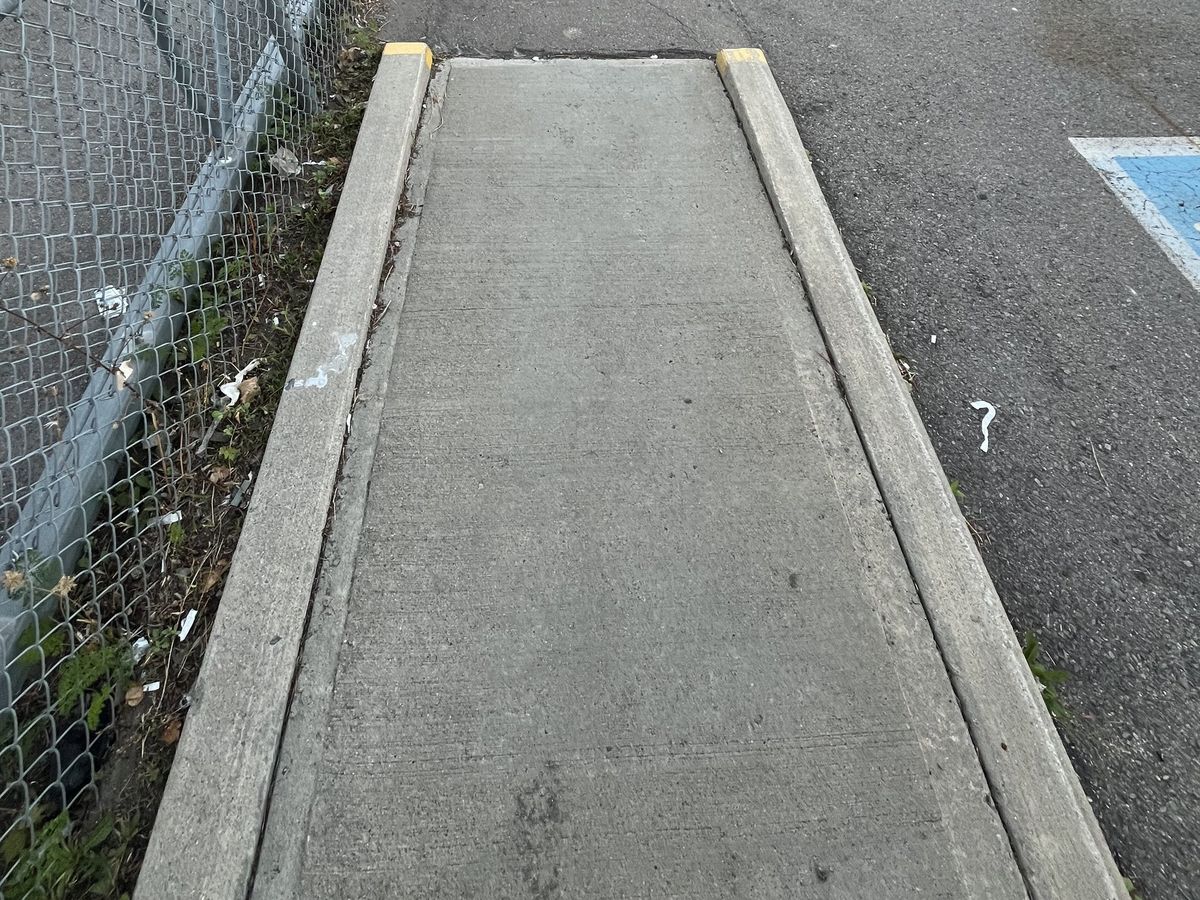
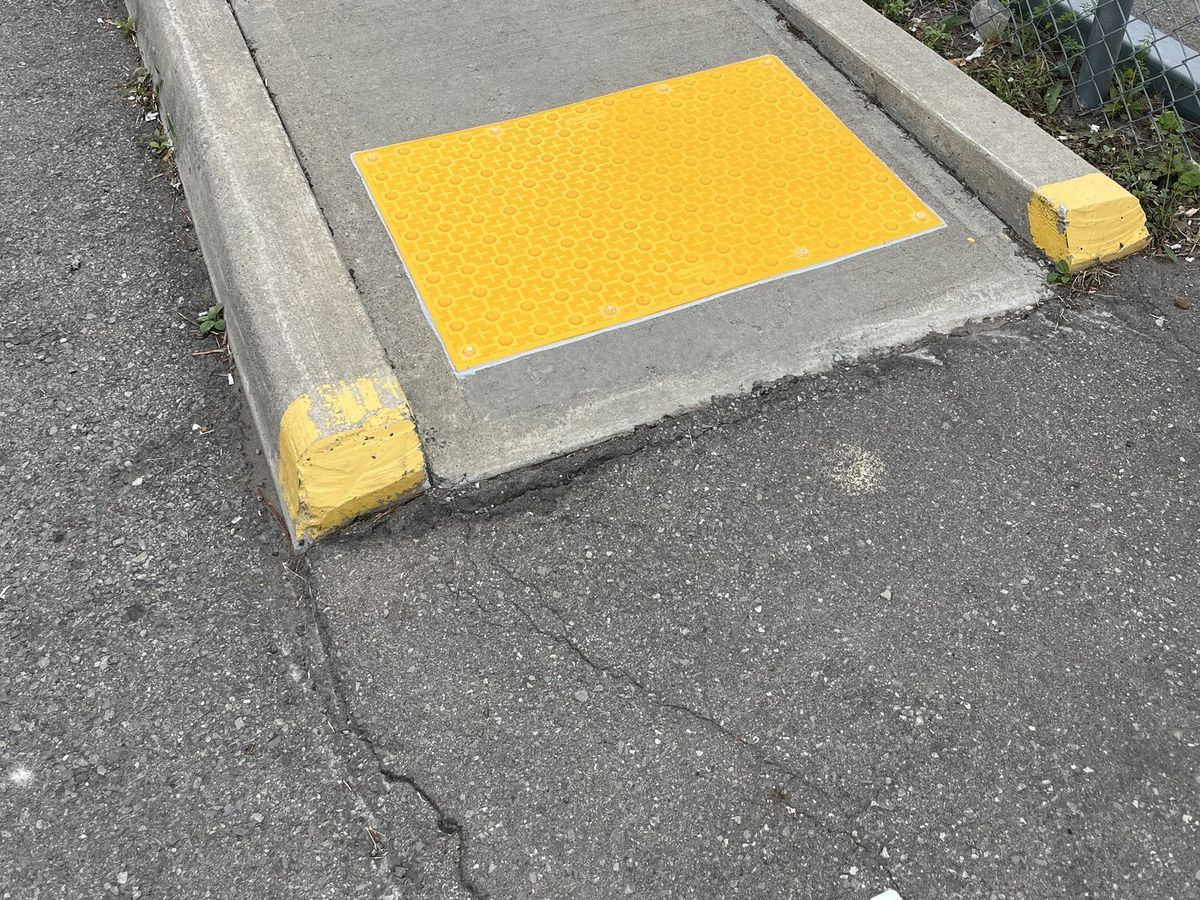
Tactile access tile installed at the walkway approach.
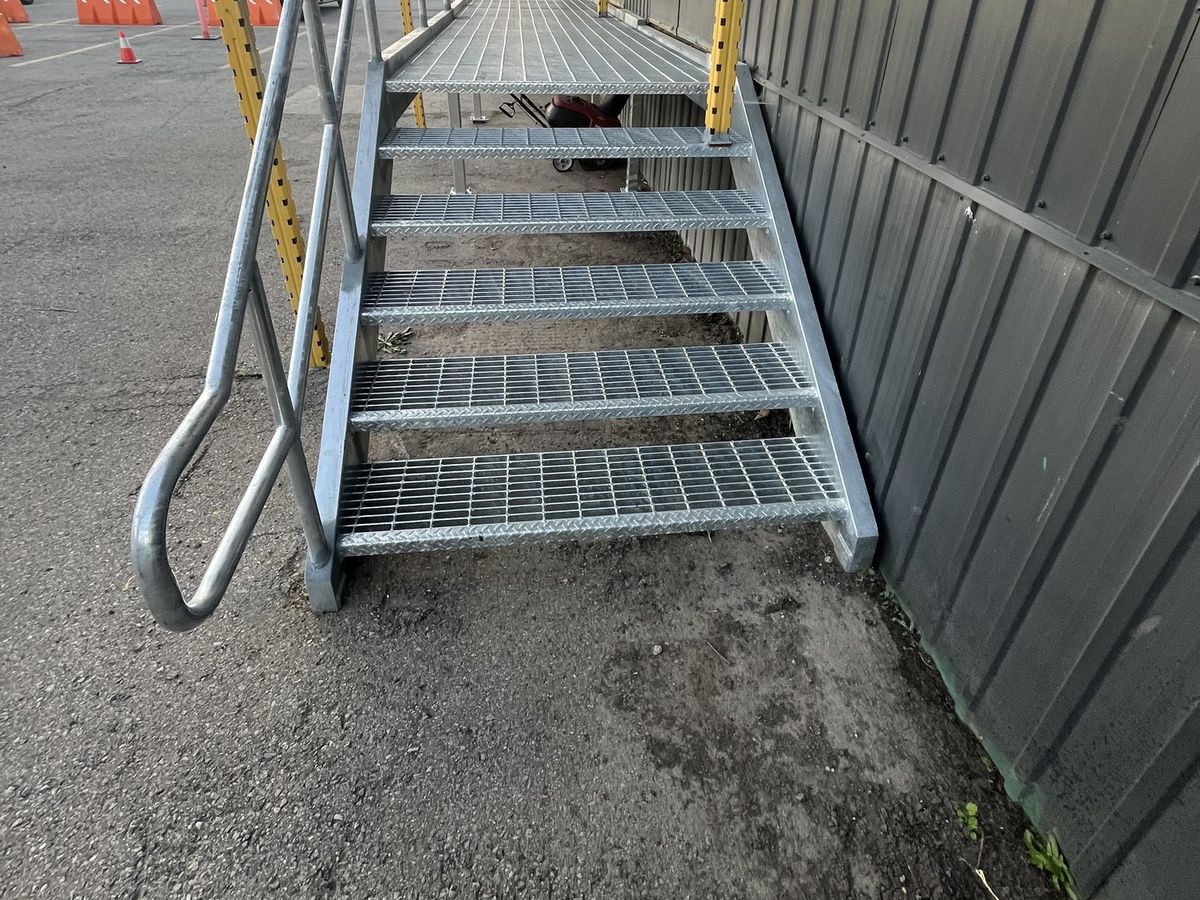
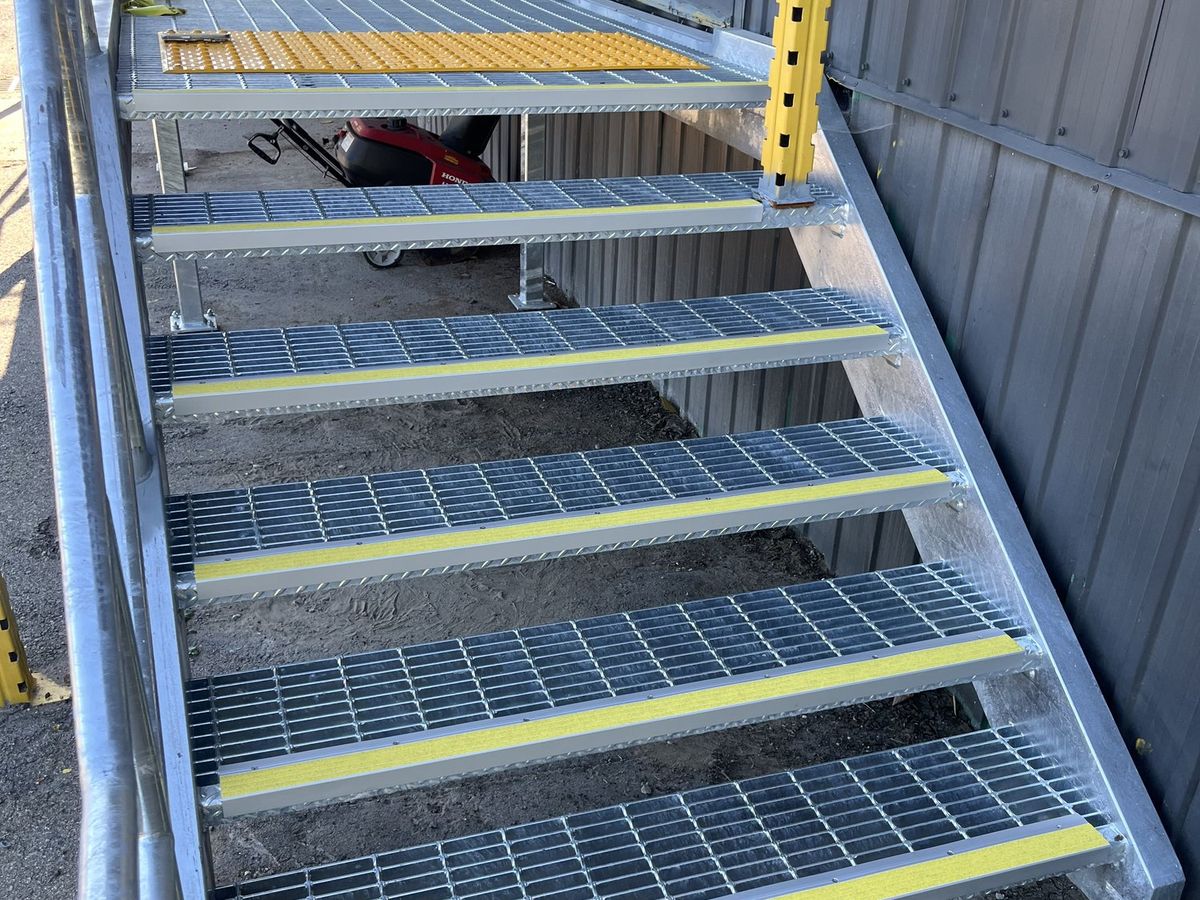
High-contrast yellow nosing added to each tread, with a tactile access tile at the top landing.
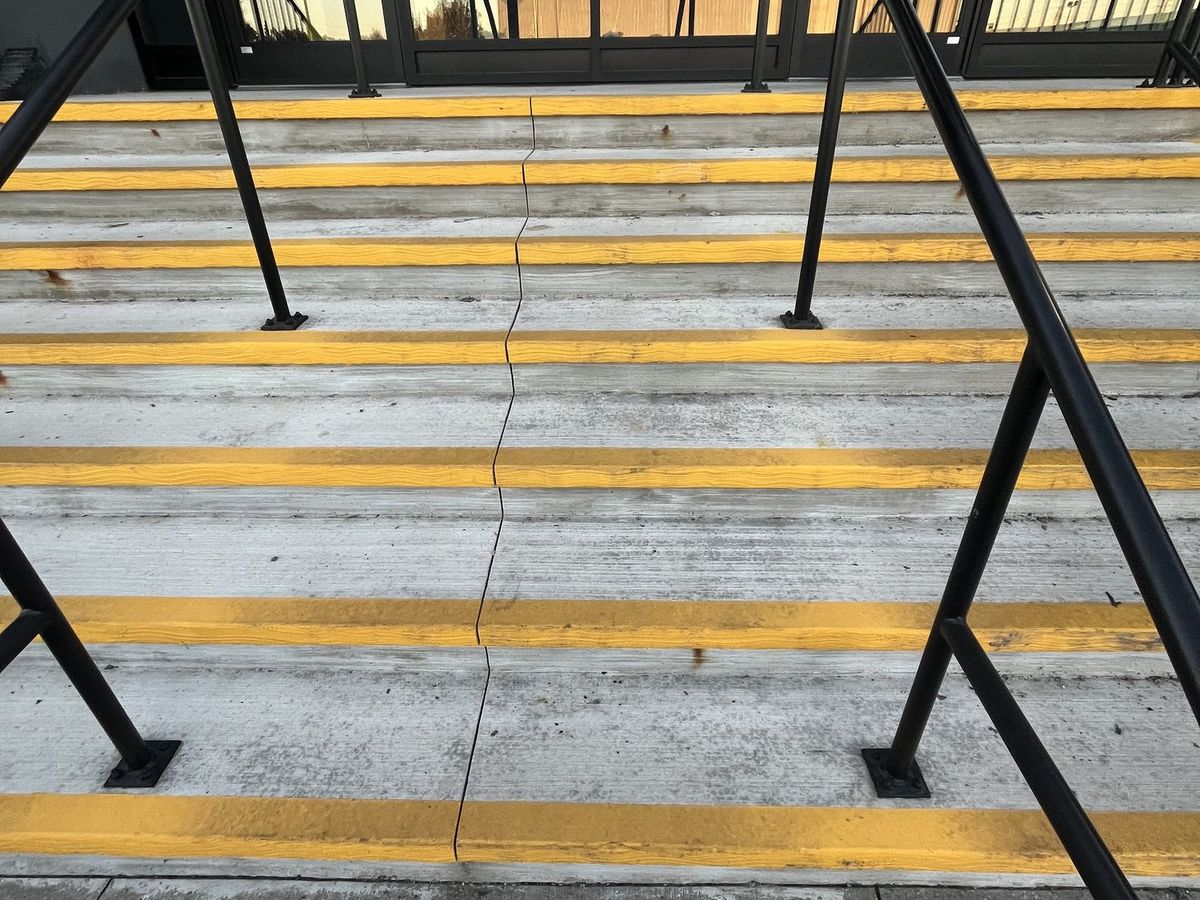
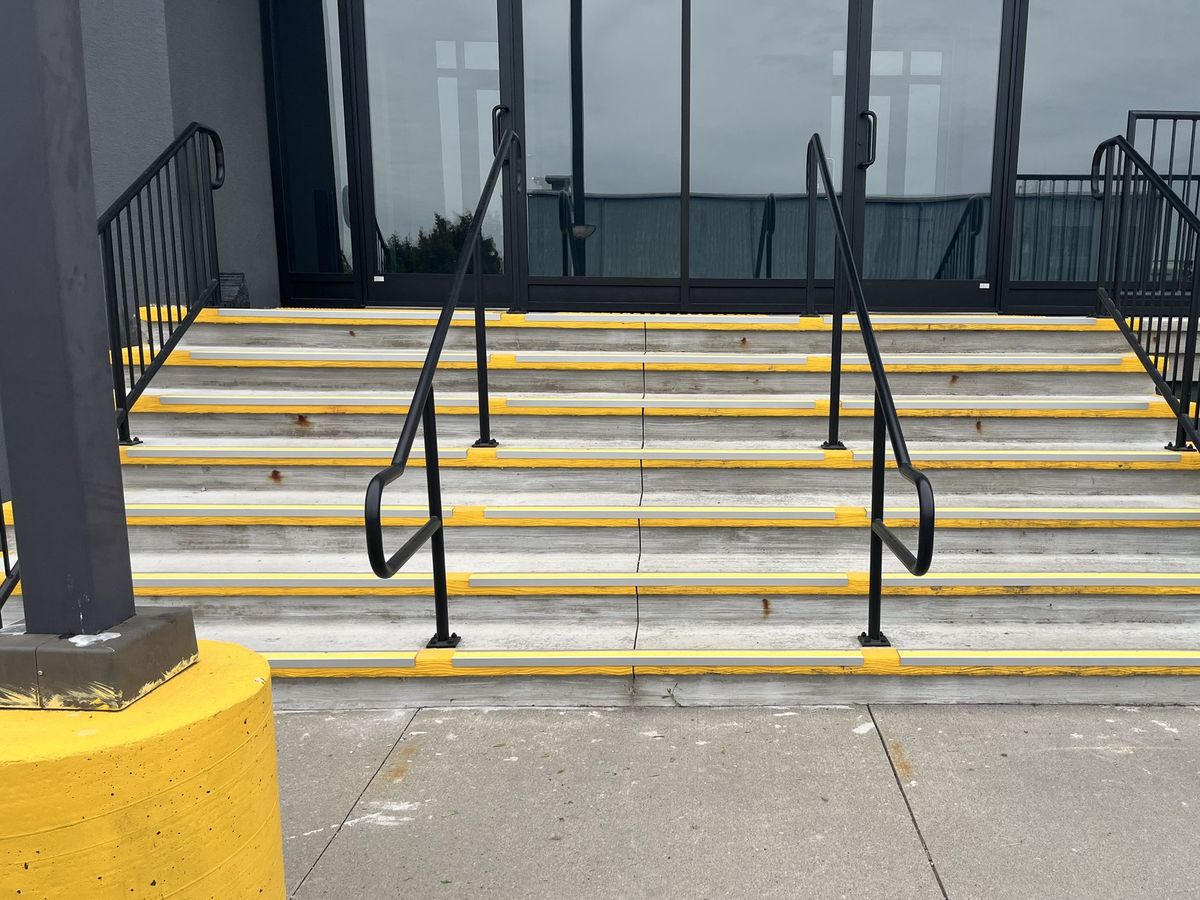
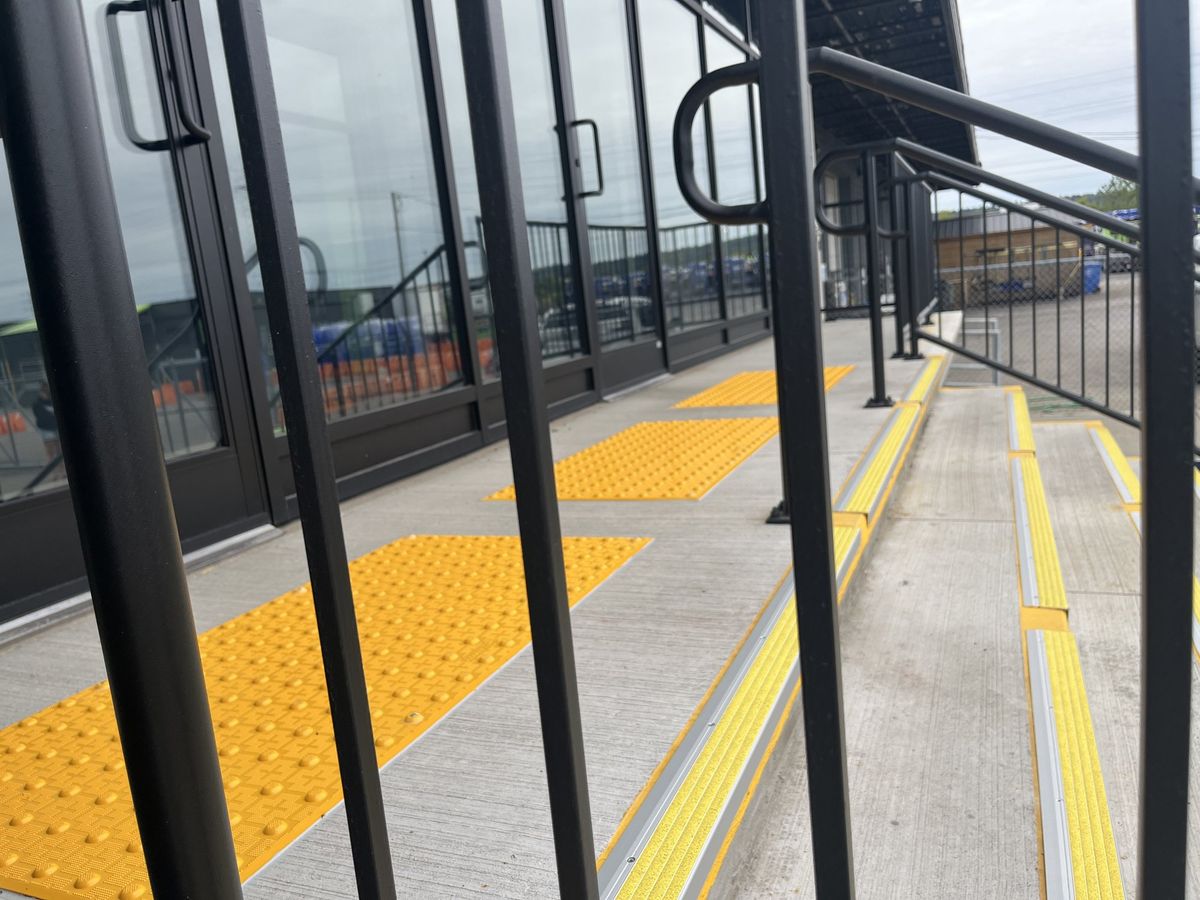
The painted yellow tread edges lacked an anti-slip surface. Complementing yellow anti-slip nosing strips were added to each tread, and tactile access tiles were installed at the top landing.
Scope: tactile access tiles and stair nosing only. Existing handrails and guards were original and were not altered. Four of six locations shown. Photos: North Shore Safety Inc., September 2026.
We monitor proposed and final rules that affect job site safety programs, so you're never the last to know. Status is reviewed and updated weekly.
Private and non-profit organizations with 20 or more employees must self-audit and file their accessibility compliance report under the AODA by December 31, 2026 — the first reporting cycle since the province's original 2025 barrier-free target passed. The report asks six yes-or-no questions, one per accessibility standard (including the Design of Public Spaces), and must be certified by a senior officer with authority to bind the organization. Work through our reporting checklist →
Under the Working for Workers Six Act, 2024, a corporation convicted of a second or subsequent OHSA offence resulting in a worker's death or serious injury within a two-year period now faces a mandatory minimum fine of $500,000 — the highest minimum workplace safety penalty in Canada. With the 25% victim fine surcharge, the effective total reaches $625,000, and it applies regardless of mitigating circumstances.
A new standalone regulation for elevating work platforms on construction projects, including MEWPs, was filed in April 2026 and takes effect January 1, 2027. Operators will need training delivered through both theory and practical means, plus an employer evaluation before they operate. Workers already trained under the current rule have five years from their original training date to meet the new requirements.
Amendments filed in April 2026 (O. Reg. 112/26) take effect July 1, 2027: a worker who may be exposed to side-impact hazards must wear Type 2 protective headwear meeting CSA Z94.1 or ANSI Z89.1, and a chin strap or other retention system is required where conditions could dislodge headwear. Type 1 remains acceptable where there is no side-impact hazard — but many constructors are already moving to Type 2 site-wide, so plan the stock transition now.
We walk your site and review existing programs against current federal and provincial requirements.
Findings are ranked by risk and deadline, so your team knows exactly what to fix first.
We source and install physical corrections where the site calls for it, and build or update the documentation, training materials, and procedures needed to close every other gap.
We stay on as your regulatory radar, flagging changes before they become findings.
A first conversation is free and unhurried — tell us about your site, and we'll tell you honestly where the risk sits.